
Ariane et Bacchus
Staged cantatas by
FRANÇOIS COUPERIN and others
DATES & TICKET INFO
Ticket Information Coming Soon!
May 2027
The Florence Gould Theater at L’Alliance New York
LISTEN TO THE MUSIC
Listen | Ariane consolée par Bacchus: VI. Air vif "Chantons le dieu du vin" · Guillaume Figiel Delpech · Les Chantres de Saint-Hilaire Sauternes · François-Xavier Lacroux
THE STORY
Ariane console par Bacchus (Ariadne consoled by Bacchus) is a recently-discovered cantata by François Couperin, and this is its American premiere. We are presenting this cantata along with other French music on the same theme composed by Couperin’s contemporaries. The cantata is the same story of Ariane et Bacchus made famous 200 years later by Strauss in his great opera Ariadne auf Naxos. Ariane has escaped to Naxos from Crete and the Minotaur with her lover, Theseus. When she awakens the next morning, she discovers that Theseus has sailed away and abandoned her. She mourns the loss of her only human connection. Bacchus, the god of wine, appears before her to console her, having been sent by L’Amour (Cupid), the god of erotic love and desire. And console her he does.
- Neal Goren
THE CREATORS
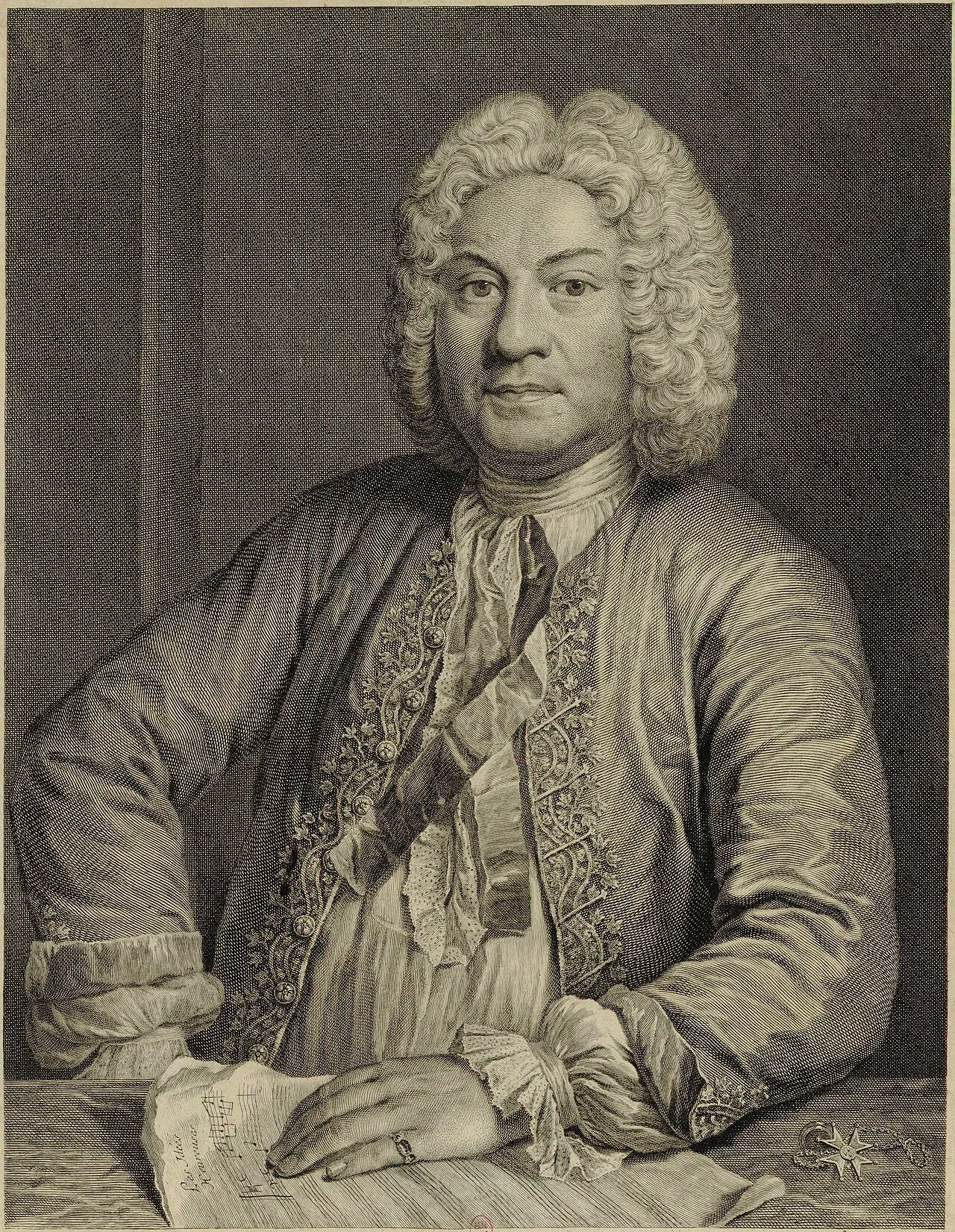
French composer Francois Couperin (le grand) was born in Paris in 1668. Composer harpsichordist and organist, he was the son of Charles Couperin the organist of St. Gervais in Paris and is the most important member of the Couperin dynasty. He wrote some of the finest music of the French classical school, and may be considered the most important musical figure in France between Lully and Rameau. On his father's pr ature death the organist position was held by Lalande. Francois, an early musical genius, was already deputizing for Lalande at the age of ten, and on his 18th birthday he officially inherited his father's previous position. As his teacher, Lalande played an important role in Couperin's early musical development, not only as a mentoR&But also as a powerful advocate of his work, he praised the young man's innovative 1690 collection of Pieces d'orgue as worthy of being given to the public' which helped to establish him as a Court organist in 1693. Couperin's early sonatas are the first fruits of his admiration for the Italian Baroque masters, and for Corelli in particular. Contact with Italian instrumental music may have been through an involv ent with the musical life of the court of the exiled James II in Saint Germain-en-Laye, where things Italian were much prized. His admiration for the Italian style was eventually expressed in overt terms in his Apotheose de Corelli of 1724, but a much earlier ambition, sustained through out his life, was to unite the complementary strengths of the Italian and French styles. In the preface to his fourth harpsichord book Couperin wrote of his health failing him day by day'. In the same year he gave up both of his court appointments, arranging for his talented daughter Marguerite-Antoinette to take over as harpsichordist, and for Guillaume Marchand to replace him in the royal chapel. Three years later on September 11, 1733 Couperin died.